The Bayou Journal ✨
Notes on Congo Square, Jelly Roll, and the Spirit of New Orleans

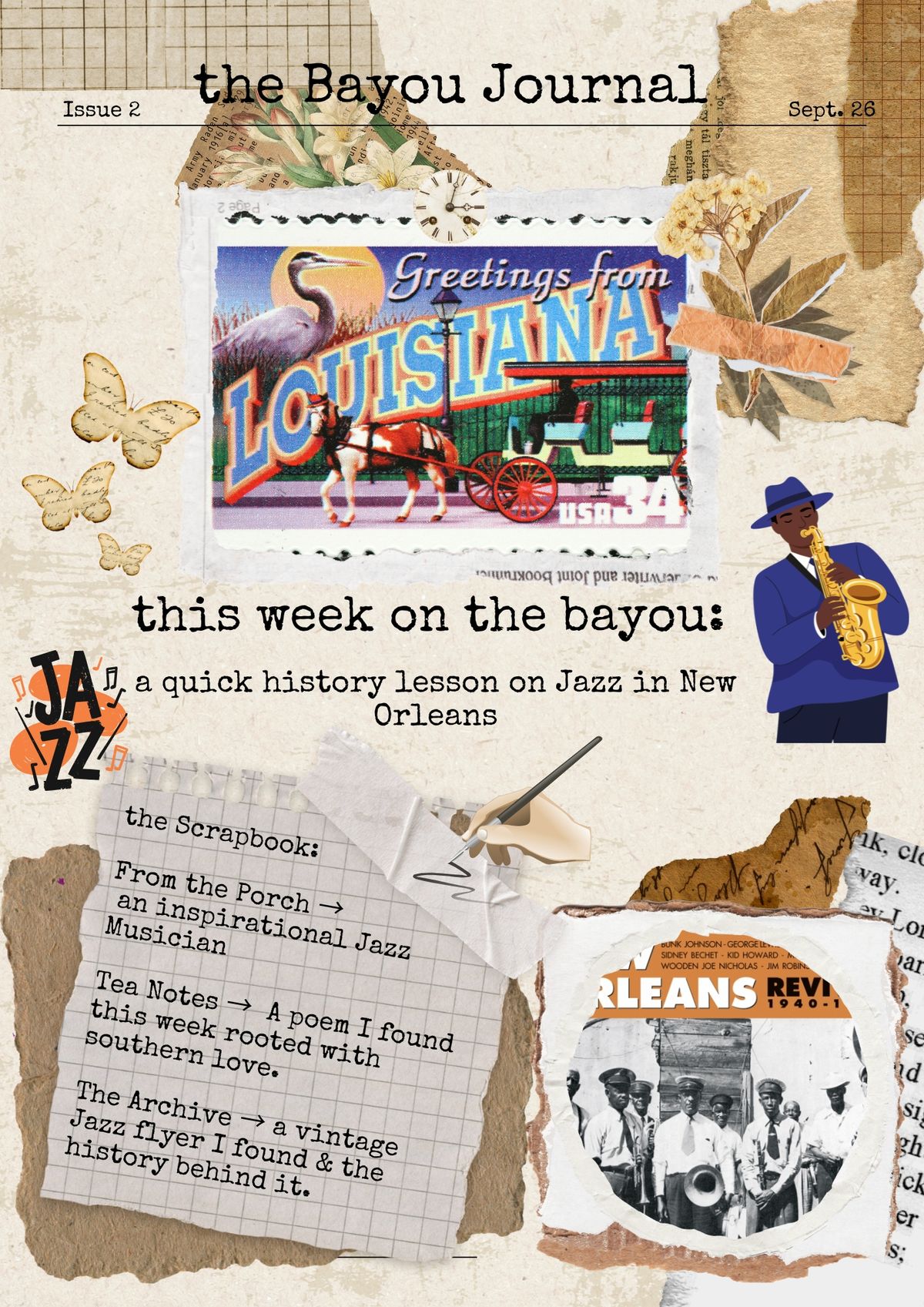
If you’ve ever been to New Orleans, you know the city carries music in its bones. Brass bands on the street and trumpets on Frenchmen. But how did jazz — this music often referred to as “America’s music” — really come about?
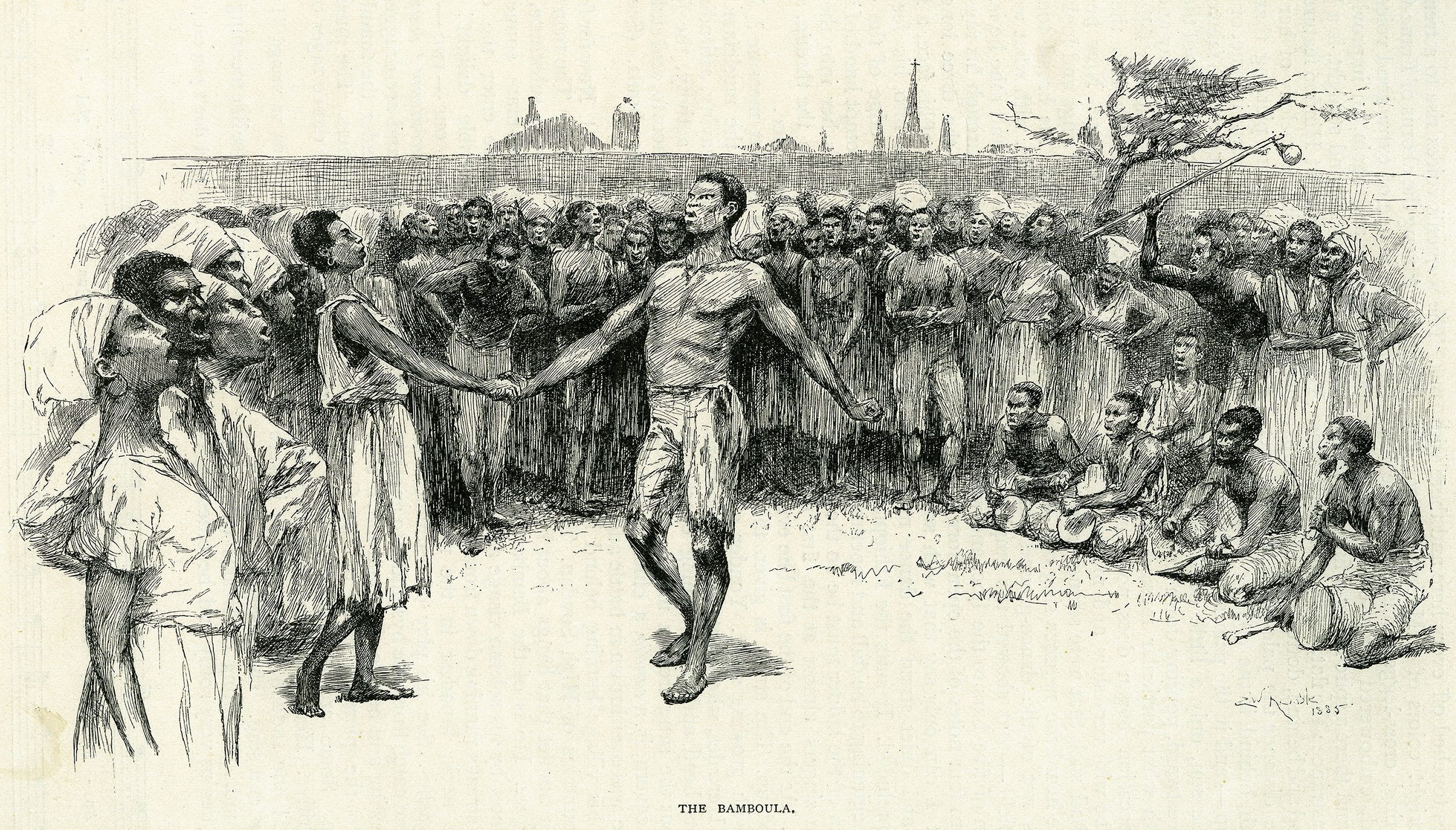
Congo Square: The Roots of Rhythm
Long before jazz had a name, there was Congo Square. It sits today inside Louis Armstrong Park, but in the 18th and 19th centuries it was one of the only places in the United States where enslaved Africans were allowed to gather on Sundays.
What happened there was very moving and powerful in many senses. Drumming, dancing, and singing filled the space. They brought rhythms from West Africa, St. Domingue, and Cuba. They played the bamboula drum, the banjo, and dances like the contredanse and for a few hours on Sundays, people created community and kept their culture alive.
But Congo Square isn’t just history, but its a myth as well. White writers in the 19th century like George Washington Cable and Lafcadio Hearn, described it as a place of “exotic abandon.” Most of them had never even seen the gatherings themselves, although their stories fed into the legend of Congo Square as the birthplace of jazz. While there’s truth to it, the real story is a bit more complicated.
The city laws continued to shift and by 1817, enslaved people were restricted to Congo Square for their gatherings. In 1835 the music was banned, then allowed again, then banned once more in 1851. By 1856, Black people weren’t legally allowed to play drums or horns in New Orleans. The square was eventually turned into a military drill ground.
Even with all of that, the music didn’t disappear. It just went underground. People kept the rhythms alive in backyards and in smaller circles. Congo Square wasn’t a straight line to jazz, but it was the ground where African traditions mixed with European and Caribbean ones — creating the foundation for what would come later.
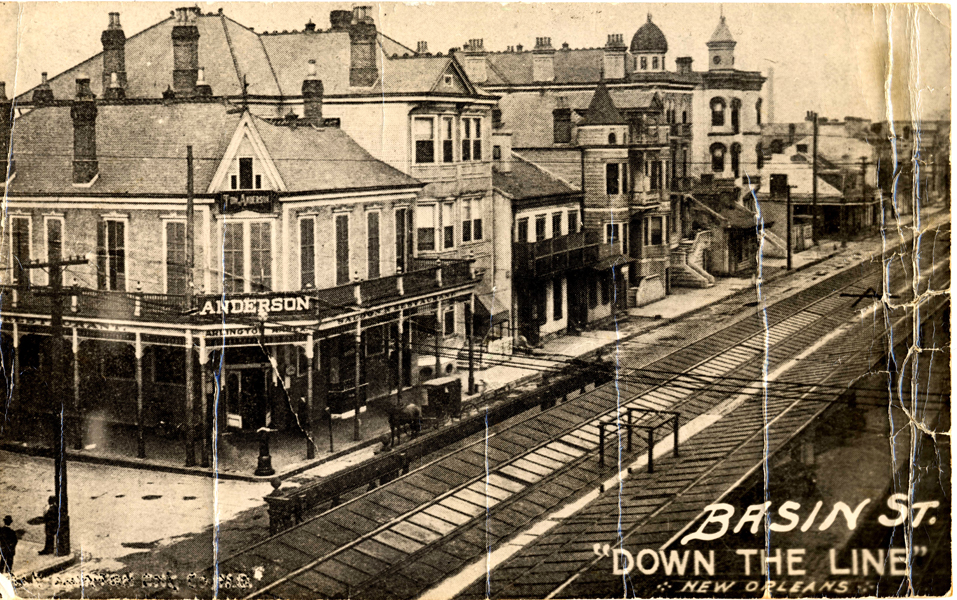
Storyville: The Hotbed of Jazz
By the late 1800s jazz started to take shape in Storyville — New Orleans’ red-light district. Around 1895, a cornet player named Buddy Bolden formed a band that sounded different from everything else at the time. His music was loud and raw and people loved it. Dancers packed the halls like Funky Butt Hall and Lincoln Park to hear him play.
Bolden’s career ended early, but he left the door open for the next wave of musicians. Kid Ory came along, leading bands as a teenager and developing the trombone style that became part of the New Orleans sound. His band included talents like Joe Oliver, Jimmie Noone and at a point, the young Louis Armstrong.
Music in Everyday Life
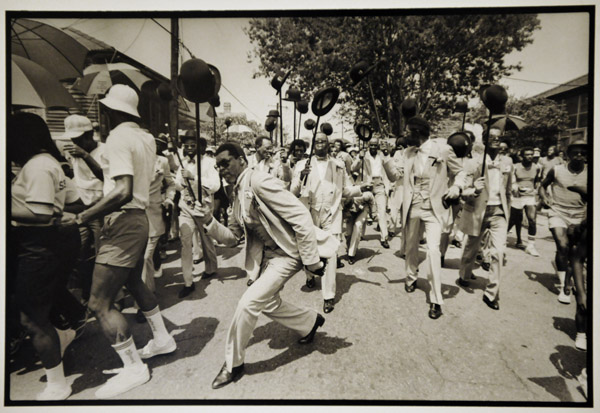
Jazz wasn’t limited to Storyville though as it played a crucial part in the daily life across the city. Economy Hall in Tremé hosted concerts and dances. Brass bands played at picnics, fish fries, and parades. Funerals featured slow hymns on the way to the cemetery, then upbeat music on the way back — a tradition that continues today that they call a “second-line”. The music wasn’t polished, but it wasn’t meant to be. Some people called it “ratty,” but it was alive. It got people moving and that was the point. Musicians often played by ear, improvising together instead of following sheet music. It sounded like a messy conversation that was full of energy.
Spreading the Sound
In the early 1900s, New Orleans musicians began taking their sound across the country. The Original Creole Orchestra traveled to Los Angeles. King Oliver and later Louis Armstrong brought it to Chicago. Armstrong eventually carried it to New York and beyond, turning New Orleans jazz into a national and then global phenomenon.
A Living Legacy
No matter how far it spread, the roots stayed here. Congo Square. Buddy Bolden. Kid Ory. Armstrong. Everyday people dancing in halls and second-lining behind brass bands. A beauty that will never die. Even now, you can stand in Armstrong Park and picture the crowds at Congo Square. Or you can walk down Frenchmen Street at midnight and hear musicians carrying on traditions more than a century old.
Jazz didn’t come out of nowhere. It came out of survival, community, and creativity. It came out of New Orleans.
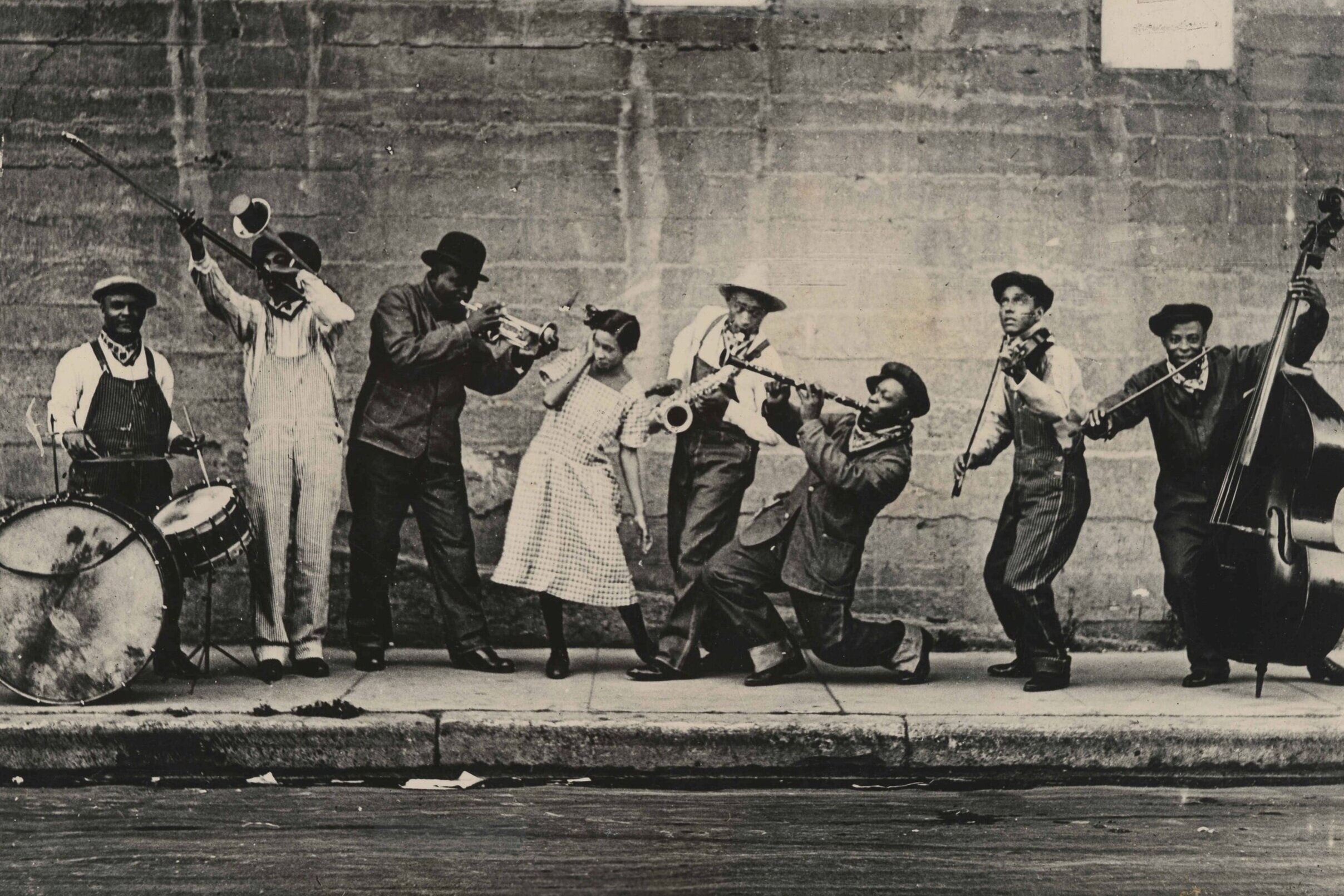
✨the Scrapbook✨
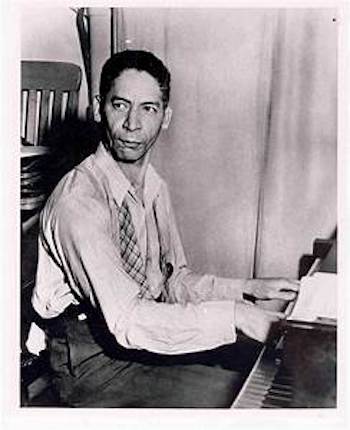
From the Porch: Jelly Roll Morton
Ferdinand “Jelly Roll” LaMothe (1885–1941) was born in New Orleans to Creole parents, right in the middle of the culture that made this city what it is. His parents weren’t too fond of his aspirations to be a musician. In fact, in his words: “We always had musicians in the family, but they played for their own pleasure and would not accept it seriously, and always considered a musician lazy and someone trying to duck work”. He started out young, playing piano in Storyville — being knowing for its gambling and brothels and it was where the music lived. These early years would go on to shape him into the great musician that he was.
By 1907, Morton was already on the road, working as a vaudeville musician and singer. He didn’t just stay put — he carried New Orleans with him. In 1915, he published “Jelly Roll Blues,” which is considered the first published jazz composition (huge!!!). That moment alone secures his place in history.
Through the 1910s and 1920s, Morton’s career kept on moving. He spent years in Los Angeles, then settled in Chicago, where he connected with music publishers Walter and Lester Melrose. He recorded for Paramount Records in 1923 and Gennett, and then eventually with his band, the Red Hot Peppers.
But like many musicians of his time, the Depression hit him pretty hard. Work dried up and his career began to fade. By the mid-1930s, Morton was living in Washington, D.C., playing at a club called the Music Box still telling his stories and playing his heart out.
This is where Alan Lomax comes into the picture. Lomax was in his early twenties working for the Library of Congress where he’d go to meet Jelly Roll in 1938. What came of that was one of the most legendary interviews in American music history. (Youtube has this interview and I will link disc one here. I’ve began listening and I’m very intrigued so this will be something I’ll be listening to over the next few days.) Over the course of weeks, Morton played, sang, and told stories — nine hours of material recorded on disc. He traced the rise of jazz from his own perspective, mixing memory, pride, humor, and exaggeration. Some of what he said was controversial (like his claim to have “invented jazz”), but his voice and his music became a priceless record of where this art form came from. Those recordings eventually became the Library of Congress Jelly Roll Morton Collection, later reissued as The Complete Library of Congress Recordings.
Jelly Roll Morton wasn’t perfect by any means. He was proud, sometimes difficult, and his career had highs and lows. But what makes him important is how he bridged ragtime, blues, and improvisation and how he insisted that jazz needed what he called the “Spanish tinge” — that little bit of Afro-Cuban rhythm that gave it some flavor. He gave us not just songs and his wit, but almost a philosophy of how jazz should sound: bold, rhythmic, and alive.
He passed away in 1941, but if you listen closely — to “Jelly Roll Blues” and to those Lomax tapes where he plays out his whole life at the piano — you’ll hear it. Both the humor and the spark that Jelly Roll had. Jelly Roll Morton didn’t invent jazz all by himself, but he left fingerprints all over it for us! <3 Thank you, Jelly Roll!
Sweet Tea Notes
This week I found myself lingering on this poem by Lucky Queue, written in 2012. It captures the glow of New Orleans in a way that feels like home to anyone who reads it — no matter where you’re from. I had to do some digging to find a poem about New Orleans that made me stop in my tracks, but this one did it. I hope you enjoy it! I will link the site where this was found here.
I want to go back, back to my New Orleans
This place that I call New Orleans is actually Louisiana
But still, the gorgeousness of this dirt and grime
The live oaks stretching over the 6-lane wide streets,
Touching leaftips, making a canopy over the passerbys
Crepe myrtles showering streets with lacy pink faerie dresses
Smells of beignets and seafood fill the French Quarter
Intense, consuming, warm, loving sun burning through your shirt
In New Orleans to say horses sweat, men perspire and women glow
is to be ridiculous. In New Orleans everyone sweats like pigs.
As for the grime I mentioned, this exists mainly in
the sidewalks cracked by live oaks which make an adventure of every walk down the street
And in any semi-deserted street
To have a Mardi Gras or St. Patrick’s Day without a parade and citywide party is to toss aside traditions and the New Orleanian way
The New Orleanians are welcoming, hearty and heartwarming, tough and unafraid to talk to a stranger on the streets.
An old black man once greeted me with ‘konichiwa’ as I walked past
A middle aged white man once struck up a conversation with us as he realised we had shared the same ferry earlier in the day
An old asian woman conversed familiarly with our family at Cafe Du Monde simply because we are Vietnamese as well
A teenaged white boy waved at us as we drove past him jogging
A different old black man stopped and serenaded my siblings, mother and me with his trumpet just because we smiled
Several young mothers and women have stopped my mother to gush over my siblings and me, usually when we were very small
I, myself, have given directions to a tourist or two, lost near Cafe Du Monde or the levee,
And I hope that the warm smiling spirit of the Big Easy will remain forever immortal.
From the Archive: New Orleans Revival, 1940–1954
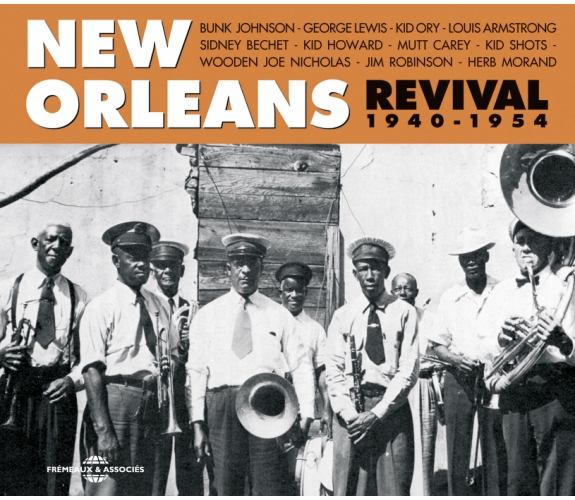
Okay so this week I came across this image, (while during research I found out it was more than a jazz flyer, but a disc). This disc is called New Orleans Revival 1940–1954 and honestly? I didn’t even know this was a thing. Apparently after WWII there was this big push to bring back the original New Orleans jazz sound — like the kind of music Bunk Johnson, Kid Ory, Sidney Bechet, and George Lewis were playing way before swing and all that took over.
They called it “gumbo jazz” which I love because it really was a mix — ragtime, blues, marches, church hymns, dance music all thrown in together. This set has songs like Muskrat Ramble, Careless Love, San Jacinto Stomp… names that already sound like New Orleans stories by themselves.
It feels less like nostalgia and more like the city refusing to let its roots die. Messy, old, but still alive — kinda like flipping through somebody’s scrapbook and finding memories you thought were lost.
Thank you so much for tuning into this week’s Bayou Journal — where I dive deep into the history of the deep south and it’s roots! I hope you enjoyed and I will see you back next week!
Scrapbook Sources:
- National Park Service. A New Orleans Jazz History, 1895–1927.
- New Orleans Historical. Congo Square.
- Tulane Music Rising. Ferdinand “Jelly Roll” Morton.
- Library of Congress / Alan Lomax Archive. Jelly Roll Morton: The Complete Library of Congress Recordings.
- Frémeaux & Associés. New Orleans Revival 1940–1954.
- Lucky Queue. Longing for My New Orleans (2012).