the Bayou Journal ✨🐊
Preserving Time, Tales, and Tea from the South

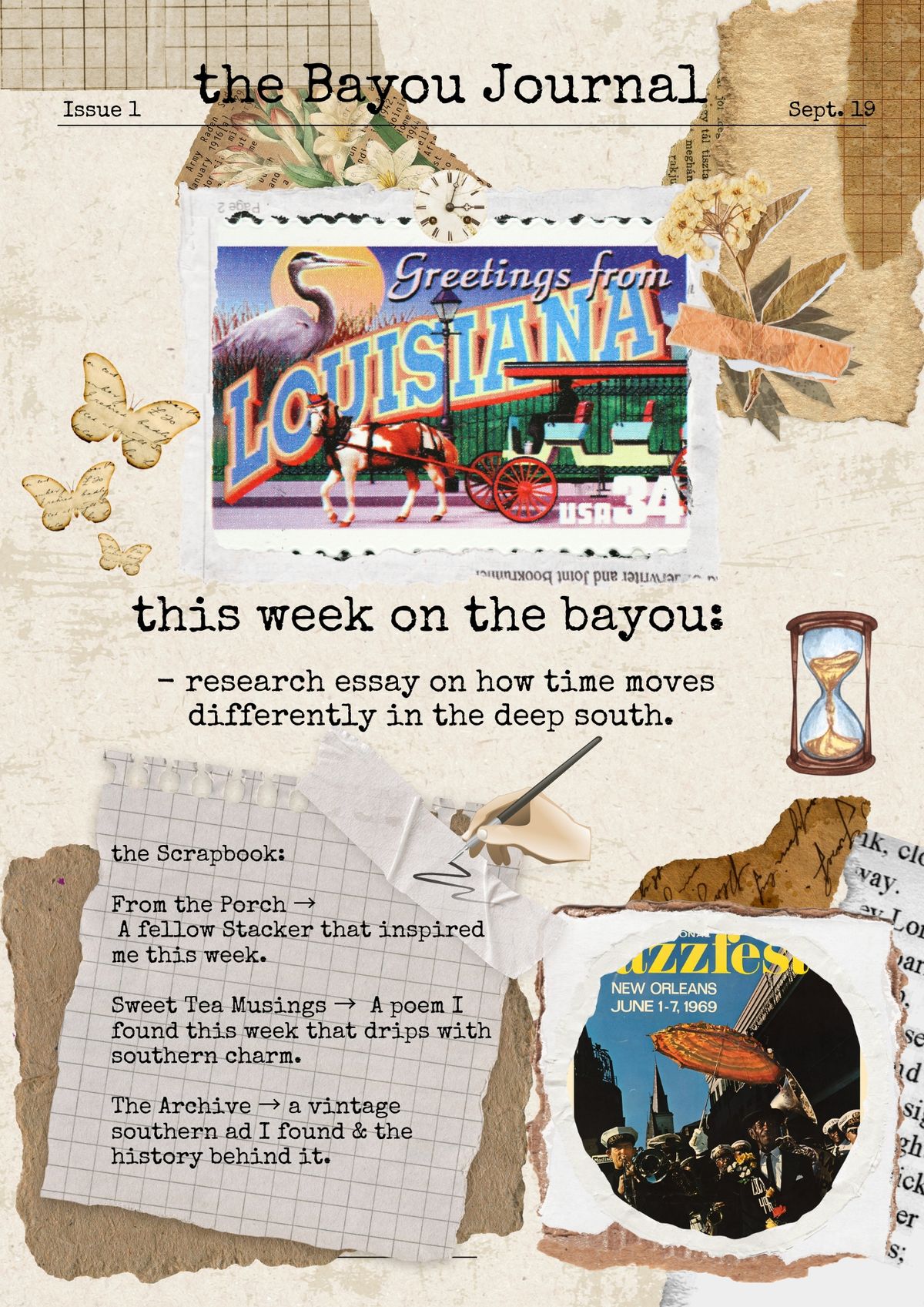
Good morning, my friends — and welcome to the very first issue of The Bayou Journal. I’m so glad you’re here, and I hope you enjoy what I’ve gathered for you today. 💌
So, what exactly is The Bayou Journal?
It’s my new weekly ritual — a slow, soulful corner of the blog where I share essays, poems, and keepsakes that drip with Southern charm. Living here in Louisiana has brought me back to slower rhythms, to front porch reflections and the kind of storytelling that lingers like sweet tea on your tongue, ya know? ;) Every week will have a different type of theme, but they will all come back to one central topic — southern roots.
Though I’m from Texas, Louisiana has always felt like home, and I wanted to preserve that feeling for myself and for you.
As a writer, I’ve always loved exploring many forms — from research essays to poetry, from personal reflections to something as small as a vintage ad that suddenly blooms into a story. Lately, I’ve been leaning into that schoolgirl version of myself: reading more, researching more, letting my curiosity lead the way. What I’ve found is that the more I fill my soul with good things, the more I have to pour back out here.
The Bayou Journal is also a gift to my paid subscribers, a little something extra to look forward to each week. Now that I’m fully embracing the housewife + author life, I finally have the space to write with intention — and to share it with you. This first issue will be free!
So, come sit a while. Let’s preserve time, tales, and tea from the South together. 🌾
What is it About the South that Makes Us Move Slower?
Scholars call this polychronic time — a way of living where minutes bend to people instead of people bending to minutes. In cultures shaped by monochronic time, mostly seen in the North or in big cities, life is rigid: meetings start sharp at a specific time, lunch breaks are short, deadlines are endless There’s an urgency… like an invisible stopwatch ticking.
But in the South — especially Louisiana — the rhythm is different. An article in HerCulture described it perfectly: “Schedules were more like guidelines. Timepieces —mere decorations” (“Slow as the South,” 2015). In other words, the clock is here, but it’s not in charge.
You see it at Sunday dinners that stretch allllll afternoon and porch conversations that outlast the sunset. Outsiders notice it too. As one writer put it, “It’s a slow pace of life in the South. People talk slow, walk slow, and work slow” (WanderWisdom).
Even Southerners themselves joke about it. Southern Living once published “26 Things Southerners Say When They’re Running Late,” and every line read like a truth I’ve lived before: “Lord have mercy, but time got away from me!” or “I had to stop and talk to Miss Linda—you know how she is.” Even the weather becomes an alibi: “It’s rainin’ cats and dogs out there, I had to wait it out.” These aren’t just excuses , but it’s everyday proof that time here is just fluid and often surrendered to nature.
🌿 Nature Sets the Pace
If the North runs on the clock, the South runs on the land. The bayous don’t hurry. Floods rise and fall, storms stop everything in their path. You don’t beat a hurricane; you board up and wait. You don’t out walk the heat — you move with it, slower, softer.
Even the trees testify to patience — oaks showing their test of time, moss draping its arms and deciding to make a permanent home. Living here means letting the landscape lead the way. And the landscape doesn’t care about deadlines, let me tell you.
Even the land teaches patience. Most of the South was — and still is — farmland. Rice, sugarcane, soybeans — all crops that refuse to be hurried. You plant, you water, you and then you wait. Months pass before harvest comes. In Louisiana, even the food that defines the people — okra, sweet potatoes, pecans — follows its own long rhythm. Farmers know what Bayou Time teaches us all: you can’t rush what’s meant to grow slow. Ya know?
🍲 Food Teaches Patience
If nature sets the pace, food almost enforces it. Louisiana staples refuse to be rushed. Gumbo must simmer for hours, roux stirred patiently until it darkens just right. Red beans soak overnight and bubble all day. Crawfish boils stretch into whole afternoons — not just a meal, but an event that gathers neighbors, friends, family, laughter, and stories.
Here in the south, meals aren’t quick stops by any means. They’re little rituals of communion. A “Sunday dinner” can last until sundown. Funerals spill into long tables of food, with every dish carrying a story. Outsiders notice this too. WanderWisdom explains it simply: “It’s a slow pace of life in the South. People talk slow, walk slow, and work slow.”
🕊️ The Pull of Bayou Time
Even people outside the South feel its tug. In an article on Northeasterners moving South, one realtor explained that many come here hoping to “reset the clock” (The Blue Banner). They’re leaving behind crowded schedules and trading them for something looser and more forgiving.
And, honestly, it’s true — Bayou Time doesn’t erase the hours at all, but it stretches them. It makes space for gumbo pots and porch swings, for neighbors lingering too long, for storms that force you to pause.
🌸 My Own Slowing Down
I’ve always wanted to live a slower life. I knew that moving to a smaller town than where I lived before, I’d thrive the best. I’d spent so much of my life in hustle mode — rushing to meet deadlines, juggling work and motherhood, measuring worth in productivity. Slowness almost felt dangerous, like I’d fall behind. I had to rework my mindset and realize what really mattered the most to me. A slower life.
I started to shift. I realized slowness wasn’t laziness. It was survival. It was depth. It was the quiet joy of being fully present with what’s in front of me.
Now, as I lean into the housewife + author life for the time being, I feel that rhythm guiding me. Bayou Time gives me space to write, to reflect, to notice. And in noticing, I’ve found more to say.
Maybe the South doesn’t actually make time move slower. Maybe it just teaches us to notice the moments between the hours by way of the land, the weather, the food, and the community that is built within the cracks of southern hospitality and the yearning for healthy relationships and friendships.
And maybe that’s the gift of Bayou Time: to remind us that our lives are not made of schedules, but of rivers, recipes, and stories.
✨the Scrapbook✨
From the Porch:
Lately I’ve been reading more articles on Substack and discovering new people with great ideas and personal essays. There is one Substacker who looks to have started her digital migration — the same way I did — from the major social media apps to only Substack. She has inspired me in many ways this week.
I absolutely adore her content and the way she is choosing to live her life. Honestly, I’m glad I found her before this Bayou Journal issue came out because her new lifestyle connects heavily with the slow life movement.
In one of her notes, she posted about activating her new flip phone, canceling major streaming services and using DVDs, and also using a physical planner (which I love — I also use a physical planner).
Digital freedom in itself with the world that we live in now is a form of rebellion almost that slow living allows us to exercise. She has really inspired me to rethink all of the ties I have to the digital media as a whole and where I may need to make some changes. I’ve already deleted all of my social media accounts except this one a few months ago! So that was a huge step, LOL. But her page is worth following. <3 Thanks Fay for inspiring me in some way this week.
Sweet Tea Musings:
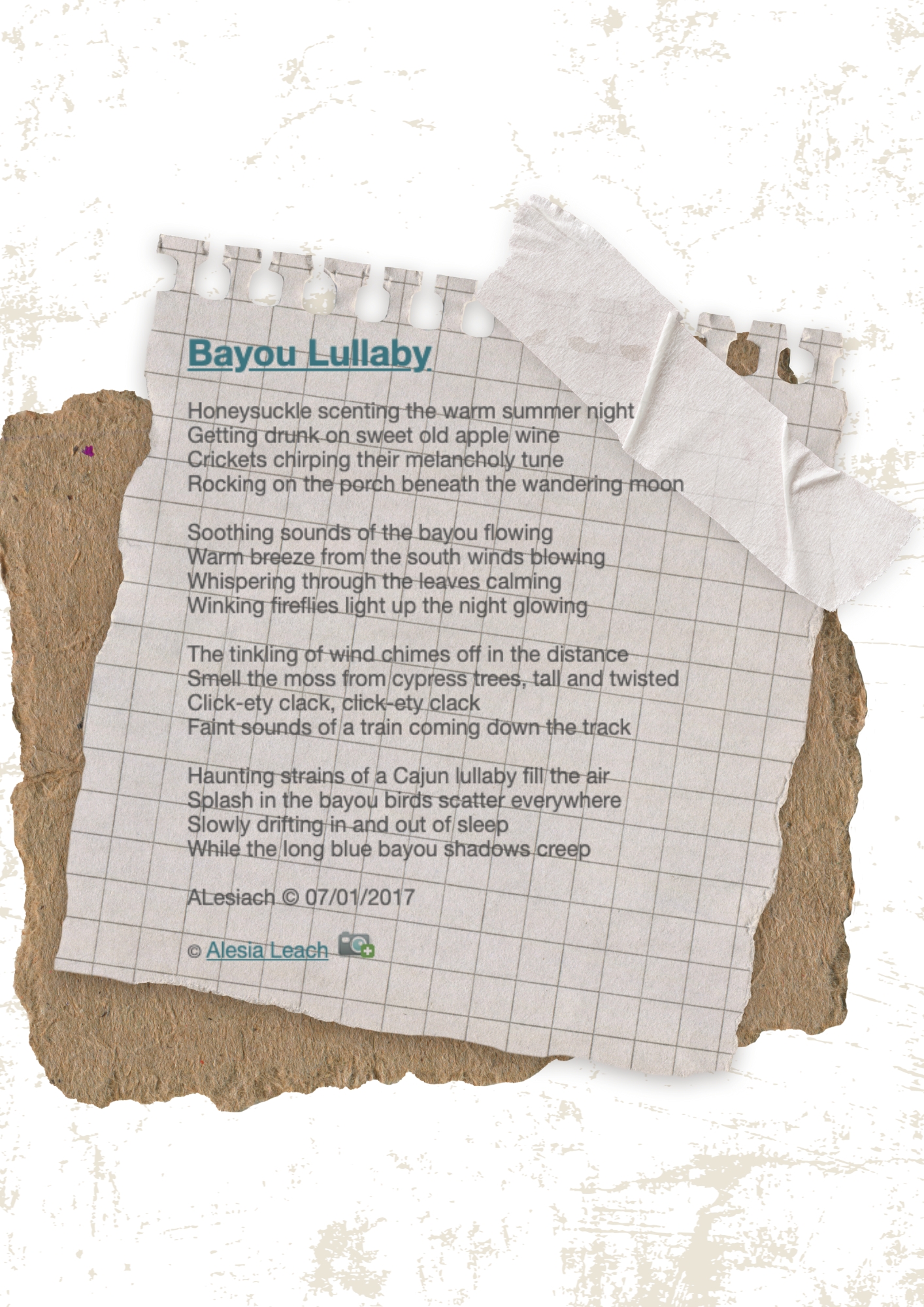
So in my quest to find a poem that embodies the beauty of the South, I came across this one — “Bayou Lullaby” by Alesia Leach. There was a wave of nostalgia that washed over me as I read it. It reminded me that no matter where you’re from, the feelings about the South run parallel: the slow nights, the moss on the cypress trees, the sound of the bayou moving steady and slow. There’s something timeless here, and this poem captures it beautifully.
From the Archives:
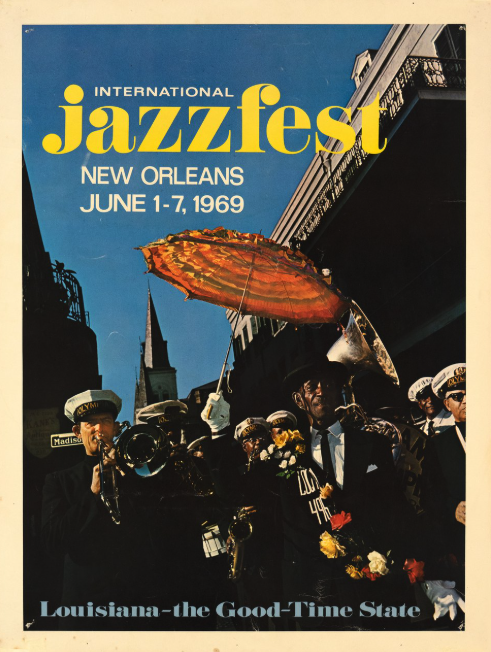
This week’s pull from the archive is a vintage poster from the earliest days of the New Orleans Jazz & Heritage Festival. Though the festival officially began in 1970, this poster captures the spirit of Louisiana’s cultural heartbeat in that moment: brass bands parading through the streets, umbrellas lifted high, music spilling out like sunlight over the Mississippi River.
The very first Jazz Fest was designed to honor Louisiana’s deep musical and cultural roots — not just jazz, but gospel, Cajun, zydeco, blues, and Creole traditions. Food was just as important as music, with gumbo pots and jambalaya served alongside the brass horns and tambourines. Posters like this became more than advertisements; they became souvenirs, art pieces, and cultural documents that carried Louisiana’s story forward.
To me, this poster feels like Bayou Time in visual form: a call to slow down, gather, eat, dance, and let the hours bend to the rhythm of the music.
That’s it for this week’s Bayou Journal. I hope you leave here with a little more softness in your day — maybe even the urge to brew a pot of tea, take a slower walk, or linger at the dinner table a bit longer. I’ll see y’all next week, same porch, same time. Until then, keep living on Bayou Time.