Was The American Dream Built for Millennials?
Optimism over pessimism — The American Dream is dead; but OUR time to dream a new dream is NOW.

I wasn’t any older than six when the televisions were rolled into my elementary school classroom and switched to the news on September 11, 2001 — smoke was pouring from buildings, reporters were speaking a little too fast, and the teachers were whispering in corners as if we couldn’t hear them. But more than anything, I remember my mother’s face when she came to pick me up early. Her eyes worried in a way I had never seen before. I didn’t understand terrorism — I just knew something had shifted, and in a lot of ways, it never shifted back.
Millennials stumbled and fell into adulthood. Moving from 9/11 to two wars overseas, from the 2008 housing crash to record inflation, from MySpace to smartphones to a global pandemic that shut the world down. Stability was rarely the backdrop of our coming of age. The only stable thing we knew was change.
Growing up, the plan felt very simple: work hard, go to college, get a stable job, buy a home, build a family. That was the American Dream. It felt reachable because we watched our parents live some version of it. One income was carrying a household and buying a simple home seemed like our rite of passage into adulthood.
Somewhere along the way, though, the math stopped adding up the way it once did.
By the time many of us reached our 30s, that blueprint felt like it belonged to another economy. Home prices nearly tripling since 2000 while wages barely stretched to meet them, rent on the rise, student loans hanging around not for a few years but for decades. Even the people who did everything “right” find themselves recalculating and pivoting.
And then there’s the mental weight of it all. We get called the “anxious generation,” and rightfully so. Anxiety brews when one is under pressure. Financial pressure, social pressure, the constant overload of knowing everything all the time. We are the first generation to be able to carry a 24-hour news cycle in our pockets before we even hit adulthood. Every crisis, war, and economic dip arrives before we’ve even finished our morning coffee.
We learned how to make five-year plans in a world that seems to change every five months. How can we build stability on ground that rarely feels steady?
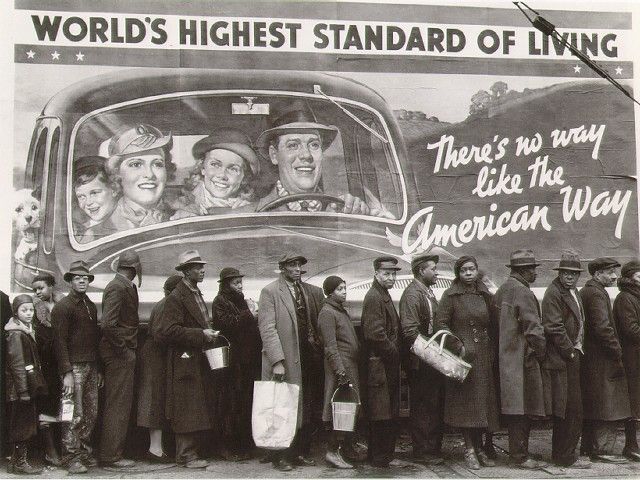
So it’s fair to ask whether the American Dream was ever built with this kind of reality in mind, or whether it was designed for a more predictable economic era that we barely remember.
The Dream we inherited promised steady wage growth, affordable housing, long-term employment with benefits and pensions waiting at the end of the road. Today, gig work replaces retirement plans, entire industries digitize overnight, and loyalty to a company doesn’t guarantee security the way it once did. And yet although we are overwhelmed, we’re also adapting.
Faced with closed doors, we millennials have started building new ones — turning hobbies into income streams, living rooms into offices, ideas into brands, and using technology as leverage. Remote work untethers opportunity from geography, creativity has become currency, and flexibility begins to matter more than formality.
What some interpret as dissatisfaction might simply just be redesign. Maybe we aren’t failing the American Dream at all. Maybe we’re the first generation bold enough to question it out loud and to ask whether success has to mean thirty years at one company, whether wealth only counts if it’s tied to a mortgage, and whether fulfillment must wait patiently until retirement.
There is a sadness in realizing that the adulthood we imagined as teenagers doesn’t exist in quite the same form and in understanding that the expectations we were raised with don’t perfectly match the economy we inherited. But there’s also power in that realization too. In recognizing that we are not passive participants in this shift, but we are indeed shaping it.
We talk openly about therapy, we question burnout culture, we choose flexibility when we can, we build online, we collaborate across state lines, and we redefine what balance looks like in real time.
So maybe the real question isn’t whether the American Dream was built for millennials, maybe the question is whether we’re meant to build a new one.